AKITSORA GAMING

Masume Mosaic

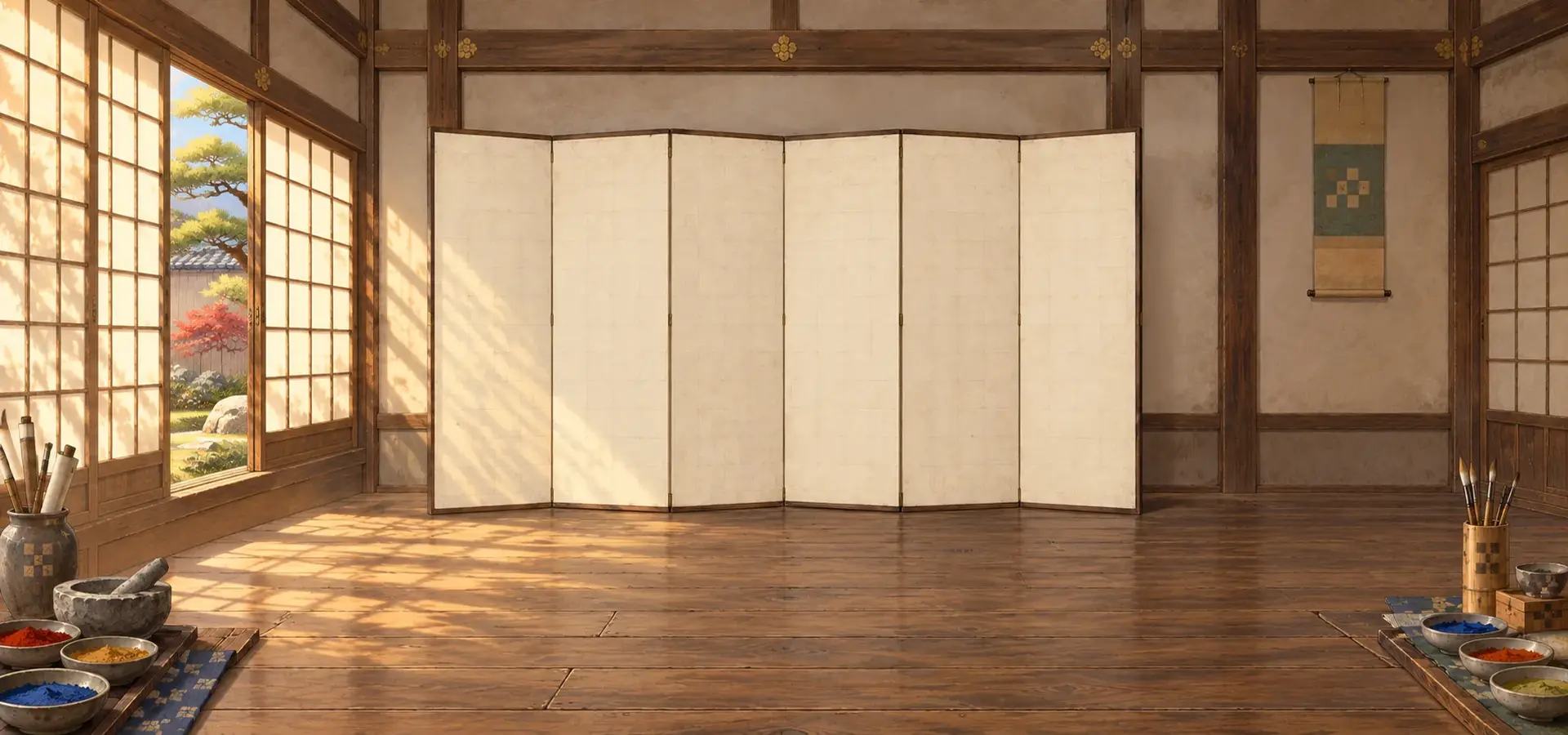
In an Edo painting studio, a folding screen painted one tiny square at a time.

Masume Mosaic is a cluster cascade on a folding screen of tiny squares. Each square that clears reveals the painting beneath, and fully painted animals step out with multipliers that multiply.

Demo play uses virtual credits with no monetary value.

RTP
96.41%
Volatility
Medium5.48
Max win
1,500× bet
Bonus buy
26.364× bet

In-game screens

Captured straight from the running game — real boards, real wins.

Masume Mosaic — An Edo painting studio
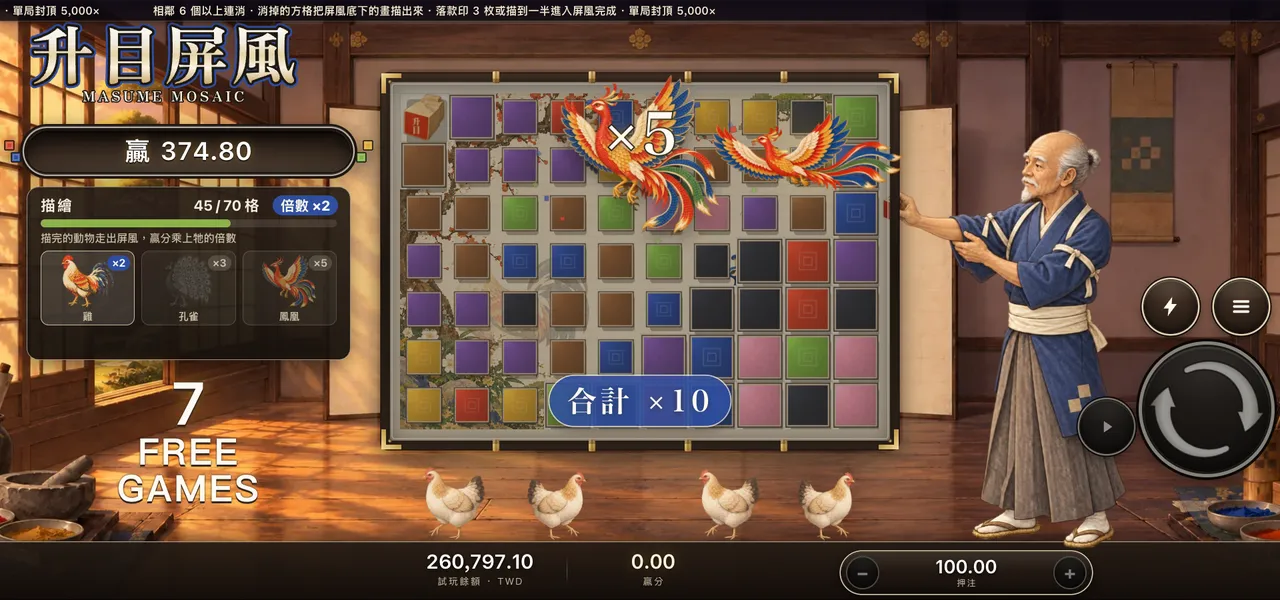
An Edo painting studioA folding screen of 70 squares where 6+ matching squares clear. The painter stands beside it, brush in hand.
Masume Mosaic — Revealing the painting
Revealing the paintingA cluster clears and the painting beneath those cells is revealed as the cascade continues.
Masume Mosaic — Screen Complete
Screen CompleteThe painting stays for the whole round; fully painted animals step out of the screen and multiply each other.
Masume Mosaic — Big win
Big winA single round is capped at 1,500× the bet.
Masume Mosaic — Bonus buy
Bonus buy×26.364 straight into Screen Complete (12 spins).
Masume Mosaic — In-game paytable
In-game paytableFrom the same game definition as this page: served by the RGS in game, read at build time here.

Specification

Type10×7 (70 squares) cluster pays with cascades (6+ matching squares touching up, down, left or right)
Return to player (RTP)96.41%
Bonus buy RTP96.41%
VolatilityMedium (5.48)
Hit rate36.85%
Rounds winning ≥ 1× bet19.25%
Max win per round1,500× bet
Screen Complete (free spins) frequency≈ 1 in 68.14 spins
Calibration sample2,000,000,000 spins, standard error 0.01%

Game math specifications and the paytable are read at build time from the definitions shared with the server code. See Math version for the configuration shown; confirm any other version or operator-specific settings separately.

How wins work

  • The grid is 10×7 with no paylines: 6 or more squares of the same colour touching up, down, left or right form a cluster and pay by their count.
  • Winning squares clear, the squares above fall down, new ones drop in from the top, and the grid pays again — until nothing wins.
  • Painting: every square that clears reveals the painting underneath that cell (a cell only counts once). In the base game every spin starts from a blank screen.
  • Seals do not pay: 3 or more on the grid once the cascades stop, or 35 or more squares painted in a single spin (out of 70), start Screen Complete (free spins).

Paytable

Values are multiples of the total bet per cluster: win = total bet × table value (by the number of matching squares in the cluster; the brush connects but is not counted). During Screen Complete every cascade's win is multiplied by the animals that have stepped out of the screen (they multiply: Rooster ×2, Peacock ×3, Phoenix ×5).

Symbol6–78–910–1112–1314–1516+
Vermilion squareHigh-pay 1.8742.9994.6867.49811.24718.744
Ochre squareHigh-pay 1.52.3993.7495.9988.99714.995
Young-leaf green squareHigh-pay 1.2181.9493.0554.8737.3112.184
Ultramarine squareHigh-pay 0.9371.52.3433.7495.6239.372
Purple squareLow-pay 0.5620.91.4062.2493.3745.623
Peach squareLow-pay 0.4690.751.1811.8742.8124.686
Brown squareLow-pay 0.3750.60.9371.52.2493.749
Ink squareLow-pay 0.30.4870.751.21.7992.999

Special symbols

Brush

Wild, substitutes for every coloured square (not the seal). When it lands it paints the 8 squares around it in the most common colour among them; it clears with the winning cluster it joins.

Seal

Scatter, does not pay and is never painted. 3 or more on the grid once the cascades stop start Screen Complete; 3 or more during the bonus add 4 spins.

Features

Masume squares — cluster pays

The screen is divided into 70 small squares in eight colours: four high-paying, four low-paying. 6 or more of one colour touching up, down, left or right clear as a cluster; the squares above fall, new ones drop in, and cascades often keep going.

The brush paints its neighbours

The brush is wild. The moment a brush lands, it paints all 8 squares around it in whichever colour is most common among them — often completing a cluster in one stroke. Seals are never painted. The brush itself is still wild and clears with the cluster it joins.

Painting reveals the screen

Each square that clears reveals one more cell of the painting beneath. Paint 35 or more cells in a single base-game spin and Screen Complete starts, just as with 3 seals — and the cells painted on the triggering spin carry into the bonus.

Screen Complete — the animals step out

Screen Complete lasts 12 spins and the painting stays for the whole round. Three animals are hidden in it: the Rooster (9 cells, ×2), the Peacock (12 cells, ×3) and the Phoenix (18 cells, ×5). Once every one of an animal's cells is painted it steps out of the screen and multiplies every cascade's win from then on; animals that are out multiply each other, so all three make ×30. 3 or more seals on the final grid of a spin add 4 spins.

Volatility and positioning

Volatility 5.48. The 36.85% hit rate counts any winning round; 19.25% of all rounds return at least the stake. Cascades and the brush carry about 58% of the RTP in the base game; Screen Complete comes about once every 68.14 spins, as the painting fills in and the animals step out one by one. A single round is capped at 1,500× the bet and ends when it hits the cap. This describes the product's positioning and does not guarantee any single session.

Bonus buy

Pay 26.364× the bet to start Screen Complete (12 spins, starting from a blank screen). The price follows the expected value of that purchase route (bonus-buy RTP 96.41%) and is calibrated separately from regular play.

Technical

Game codeaki_masume
Math versionmm1
TechnologyHTML5, no plug-in; one client for desktop and mobile
ViewportLandscape with proportional scaling
In-game languageTraditional Chinese (additional languages on request)
CurrenciesTWD (others can be registered on request)
IntegrationTransfer wallet (Operator API v3), launch-token redirect

Sources & verification scope

This product specification is written and maintained by its developer, Akitsora Gaming (AKI電子 in Taiwan). Measurement methods and sample information for RTP, volatility and hit rate appear in the specification table. Sampled results have uncertainty; RTP describes long-run return, not an individual player or session outcome.

Internal simulations and tests are not independent certification. We do not currently hold GLI or BMM certification reports. Supply to a market requiring third-party certification depends on completing its requirements.

See slot game development and supply for integration and supply scope, About us for development and content responsibility, or contact us for a math summary, version confirmation or a correction to this page.

The story

Fiction and adapted settings written by Akitsora Gaming for this title, including invented dialogue and events. This is not a historical or folklore reference. The rules and specification tables define the gameplay and math.

The paper door slides open on an Edo studio scented with animal glue and pine-soot ink.
Across the tatami lies a folding screen—a painting from afar, a thousand tiny squares up close.

I. The Art of Painting by Squares

Among the playful masterworks of Edo-period painting is the technique known as masume-gaki, or grid painting. The artist first rules a blank folding screen into a fine lattice of tiny squares, then prepares eight mineral pigments—vermilion, ochre, young-leaf green, ultramarine, purple, peach, brown, and ink—filling the lattice one square at a time.

Seen from across the tatami room, plumage and crest blend into a living creature; seen nose-to-paper, every feather is a mosaic of distinct colour blocks. Whenever matching squares join up, down, left, or right into a cluster on the grid, they clear away to reveal the hidden underdrawing beneath that cell.

II. A Stroke of the Painter's Brush

Cross-legged beside the folding screen, the painter studies the lattice and touches the paper with a loaded brush. In a single fluid stroke, all the neighbouring squares around the tip take on whichever pigment is most common among them, binding scattered blocks into a sweeping cluster that cascades across the screen.

Out on the sunlit wooden veranda, tame roosters and hens wander past the open shoji doors, tilting their heads to peer at the emerging artwork on the floor before returning to peck at spilled grain in the courtyard. Only the soft whisper of bristles on paper breaks the stillness of the afternoon.

III. Living Birds Step from the Screen

Paint enough cells of the screen within a single base-game spin, or gather the artist's red seals once the cascades settle, and the studio enters Screen Complete. Throughout these free spins, every cell of the underdrawing that has been uncovered stays visible on the folding screen from round to round.

Hidden within the lattice are three birds of ascending splendour: the proud rooster, the iridescent peacock, and the mythic phoenix. The moment every square belonging to one of these creatures is painted in, it ruffles its feathers and steps right out of the screen to multiply every cascade that follows.

IV. The Final Vermilion Seal

When two or all three birds have stepped out onto the studio floor together, their multipliers multiply one another, turning every cluster of pigment on the screen into a radiant finale. At last the master presses his vermilion seal in the corner, signing the finished folding screen.

From humble mineral colour squares to living birds stepping off gold leaf, the studio's mosaic is the artistic heart of the game rather than a promise: every cascade, brush stroke, and symbol drop is governed solely by the server's random number generator.

Want to spin Masume Mosaic yourself?

The demo needs no account — click and spin. For integration docs, the math summary or sandbox access, send us an email.

Demo play uses virtual credits with no monetary value.