





The story
Fiction and adapted settings written by Akitsora Gaming for this title, including invented dialogue and events. This is not a historical or folklore reference. The rules and specification tables define the gameplay and math.
The entrance music fades, and the lone storyteller settles onto his red cushion.
He lays a folding fan across his knee—and the paper screens of the row-house slide open.
I. Neighbours Behind the Paper Screens
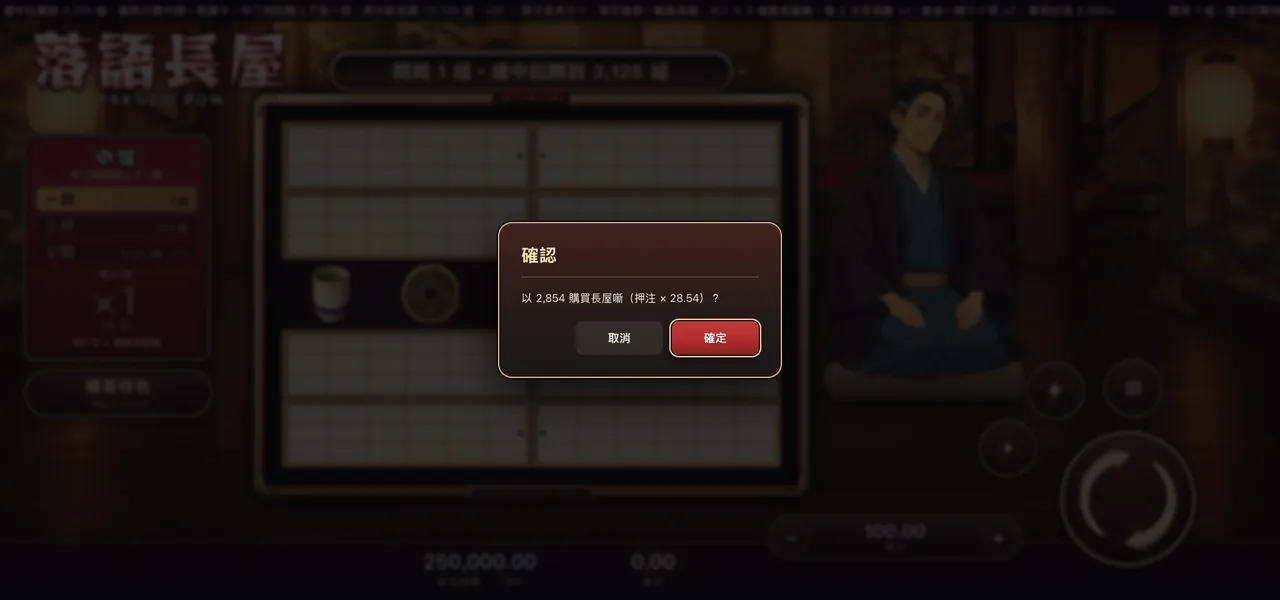
In traditional Japanese rakugo comedy, a single performer sits kneeling on a raised cushion with neither painted scenery nor supporting cast, bringing an entire Edo neighbourhood to life through voice, head tilt, and gesture alone. On the board, the reels are framed by the sliding paper screens of a lively back-alley row-house.
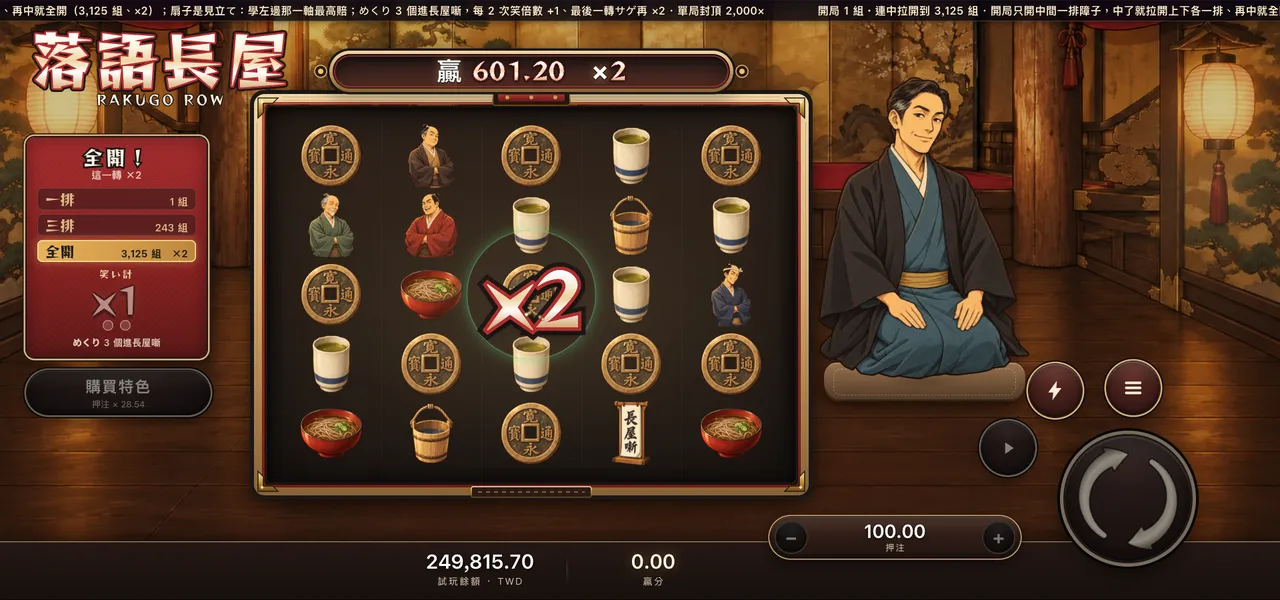
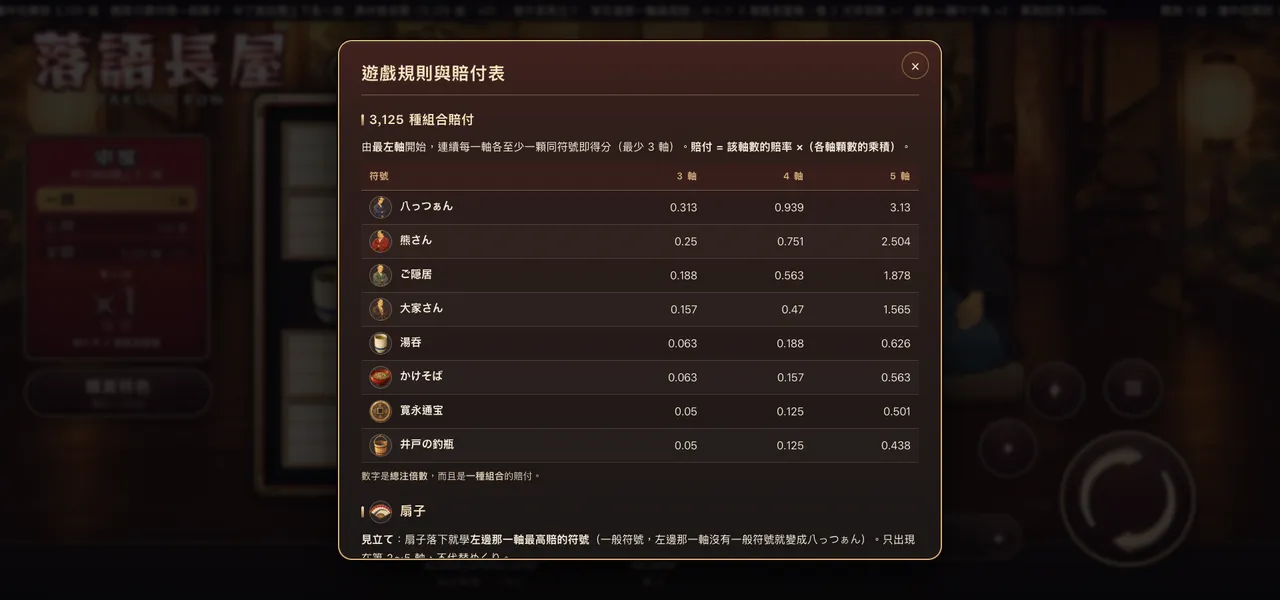
Behind those paper screens live the classic characters of Edo tales: hot-headed Hachi, burly Kuma, the wise old master, and the bustling landlord, surrounded by everyday lane props—a stoneware teacup, a steaming soba bowl, a string of Kan'ei coins, and the wooden well bucket.
II. Sliding Screens and the Art of Mitate
A back-alley rumour never stays quiet for long. Each spin begins with only the middle row of paper screens open; score any win, and curious neighbours slide open another row above and below for a free respin. Win a second time, and all five rows of screens slide wide open with a multiplier across the whole house!
The storyteller's two props work their stage magic on the open cells: the folding fan practices mitate—mimicking the highest-paying symbol on the reel to its left—while a cotton tenugui towel unrolls to turn every open window on its reel into the same matching symbol before the fan copies it.
III. Row-House Tales and Building Laughter
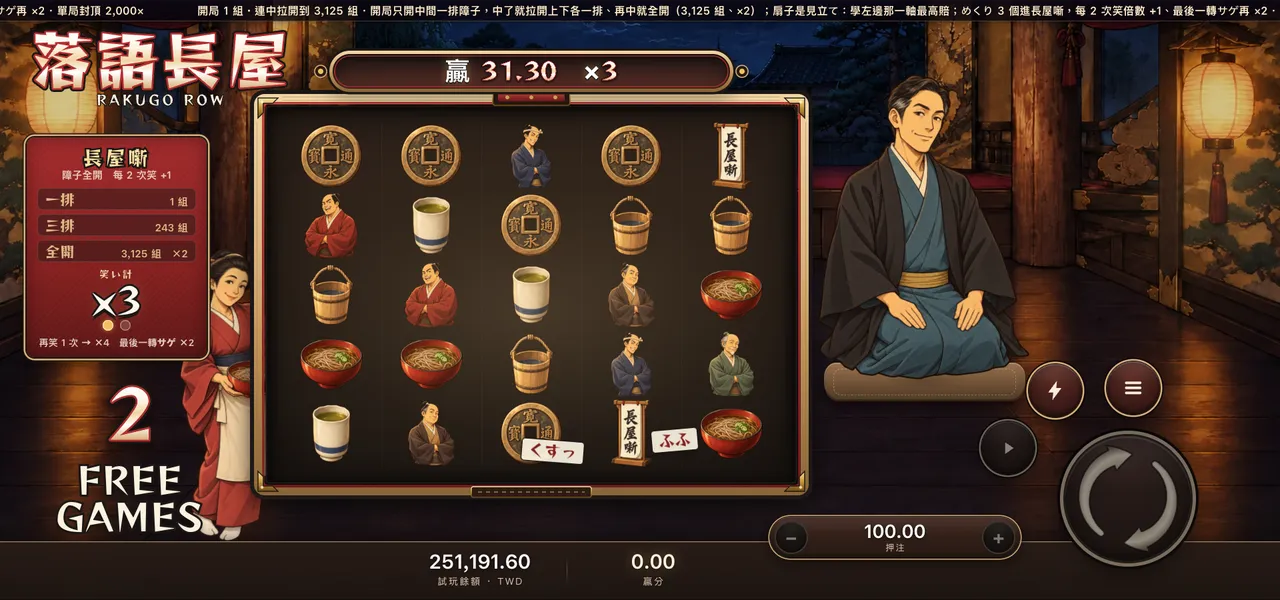
When enough vertical paper name cards appear in the open windows on a spin or respin, the wooden clappers tap and the main story—the Row-house Tales bonus—begins. Throughout these free spins, every paper screen across all five rows stays wide open from the first spin to the last.
Each winning spin sends a ripple of mirth through the theatre hall, adding a mark to the laughter meter beside the stage before the payout is tallied. Every few laughs raise the story's multiplier another notch upward, rewarding the momentum of a well-told tale.
IV. The Final Punchline and the Bow
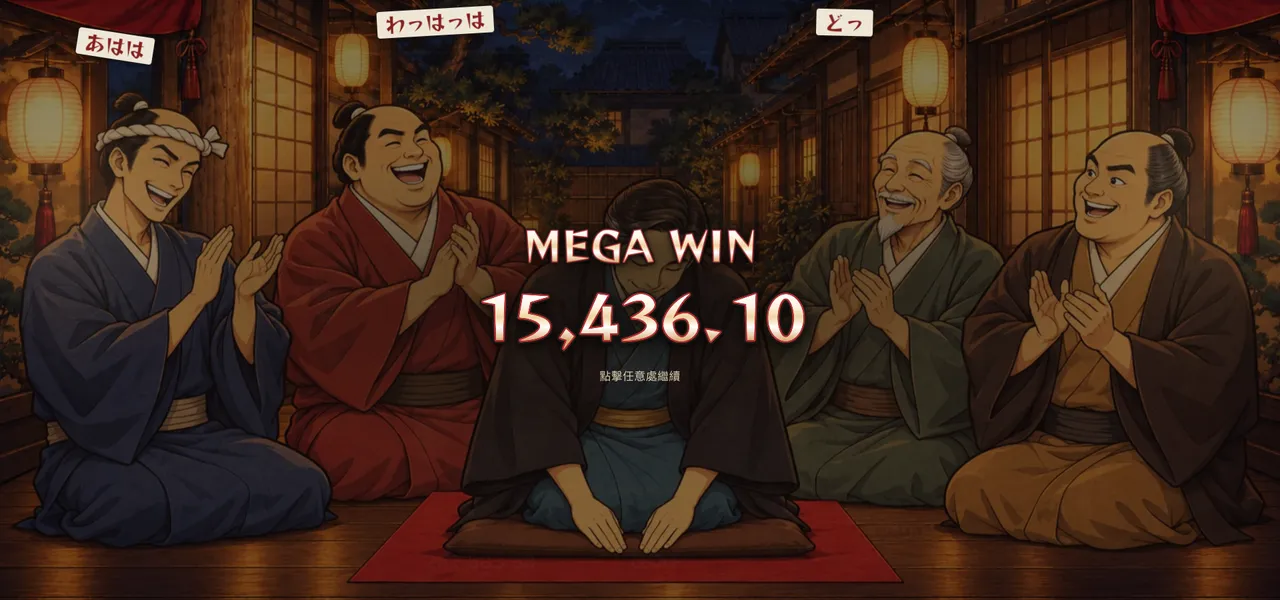
Every classic rakugo routine builds toward its closing twist, known in the theatre as the sage or punchline. On the very last spin of the bonus, the clappers sound, the storyteller delivers the final line, and that spin's payout—already boosted by the laughter meter—is multiplied once more.
Picking up his folding fan and cotton towel from the cushion, the performer bows low to the cheering crowd as the paper screens slide shut. This comedic slice of Edo row-house life is the game's theme rather than a promise: every spin's outcome is decided solely by the server's random number generator.